Duke Basketball Memes: Has Less Winning Changed the Hype?
Duke basketball. The very name conjures strong emotions – adoration from the Cameron Crazies, and often, an equally fervent loathing from nearly everyone else. For decades, the Blue Devils have been a powerhouse, a polarizing force that dominated the college basketball landscape. This unique position made them a perennial target for the internet's most potent form of expression: the meme. But as the program navigates a post-Coach K era and a period with fewer national titles, a crucial question emerges: Has less winning fundamentally altered the landscape of Duke memes and the pervasive hype surrounding them?
The Golden Age of Duke Hatred and Memes: A Villain Forged in Victory
To understand the current state of Duke memes, we must first revisit their genesis. For a significant span from the mid-1980s through the 2010s, Duke wasn't just good; they were *dominant*. With Coach K at the helm, they amassed 11 Final Four appearances and four national championships between 1986 and 2010. This consistent success, combined with their polished image and often intensely competitive players, inadvertently cast them as the ultimate villain in college basketball.
It was during this era that the most iconic anti-Duke sentiment solidified. Fans of rival teams, and indeed, fans of any team not named Duke, delighted in their losses. A Duke defeat wasn't just a loss; it was a cosmic rebalancing, a joyous occasion celebrated with widespread relish. This collective schadenfreude was the fertile ground from which early internet Duke memes sprouted. These memes often centered on:
- Player Archetypes: The "goody-two-shoes" senior, the overly aggressive defender, the perceived flopper.
- Coach K's Reactions: His intensity, his sideline demeanor, his post-game handshakes.
- Epic Collapse Narratives: Celebrating any upset or late-game blunder as a just dessert for the "Dukies."
The beauty of a Duke loss, as one analyst put it, required a "fall from a perch." When you're consistently at the top, a stumble feels more significant, more satisfying for those watching from below. This high perch fueled an unparalleled level of meme-worthy content, all driven by the passionate, often negative, emotional investment of millions.
A Shifting Dynasty? Duke's Recent Performance and Meme Impact
Fast forward to the present, and the narrative has undeniably shifted. Since their last national title in 2015, Duke's championship hardware collection hasn't grown. While still an elite program, they've made only three Final Fours since 2011. This period of relatively less consistent deep March runs begs the question: If the perch isn't quite as high, does the fall still generate the same seismic meme response?
The answer is nuanced. The inherent dislike for Duke is deeply ingrained in the fabric of college basketball fandom and hasn't evaporated entirely. For instance, last year, when the Blue Devils squandered a late lead against Houston, the joy in their loss was palpable and widespread like the old days. It was complete with fresh memes, notably drawing from the third season of HBO's "The White Lotus"—memes so pervasive that the university felt compelled to issue a statement condemning them. This incident clearly demonstrates that even with less consistent winning, the emotional investment in Duke's struggles remains potent.
However, the *frequency* and *intensity* of these high-profile March moments, particularly those culminating in a dramatic "fall," have decreased compared to the legendary run from 1986-2010. Without as many colossal upsets or heartbreaking eliminations from the pinnacle of contention, the sheer volume of "Duke lost!" memes might naturally diminish. The narrative moves from "They finally got what was coming to them!" to perhaps a more generalized "Oh, Duke lost again." This subtle shift can change the virality and longevity of individual memes.
The Rise of the Social Media Star: New Faces, New Memes
Perhaps the most significant factor influencing the evolution of Duke memes is the seismic shift in how modern athletes engage with their audience. In the past, fans largely saw Duke players exclusively on the court, clad in their Blue Devil jerseys. Their public persona was primarily defined by their on-court performance and team narrative.
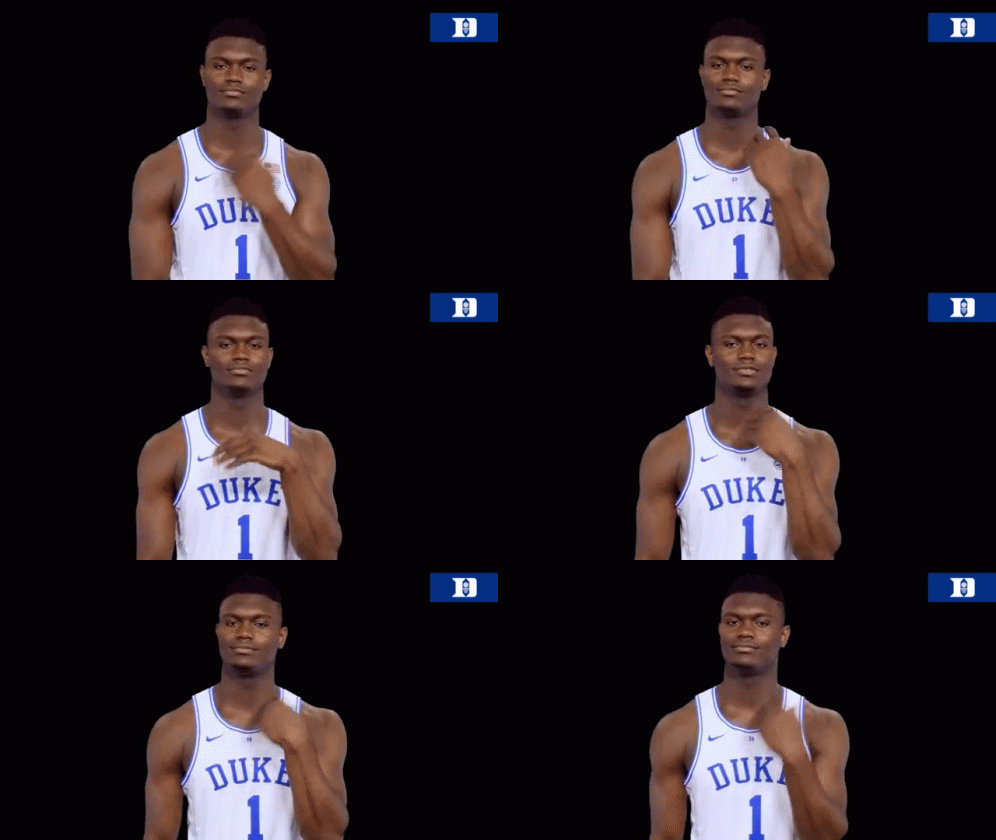
Today, that dynamic has been completely transformed by social media. Future Duke stars often arrive in Durham already boasting massive personal brands. Think of Zion Williamson, who was a social media sensation in high school thanks to his viral dunks, long before he ever suited up for Duke. More recently, Jared McCain's TikTok dances garnered millions of views from people who may not have even watched him play basketball.
This individual fame has profound implications for Duke memes:
- Humanization of the "Villain": Players like McCain, Cooper Flagg, and Kon Knueppel are increasingly perceived as "genuinely nice guys who don't aim to be the villain." Their social media presence often showcases their personality, humor, and relatable moments, making it harder for fans to universally cast them as pure antagonists. This shift challenges the traditional "hating Duke" narrative.
- Player-Centric Memes: Memes are no longer solely focused on team performance or collective "villainy." They often highlight individual player quirks, viral moments (good or bad), or off-court activities. McCain's dances or Zion's dunks become standalone meme content, independent of the team's overall success or failure.
- Broader Appeal: A player's TikTok fame can introduce Duke basketball to new demographics who might not traditionally follow college hoops. These new fans interact with the brand through a different lens, often one of admiration for individual talent or personality, rather than the historical context of rivalry and animosity.
This dynamic has created a fascinating dichotomy: while the collective institution of Duke might still draw ire, the individual players are often celebrated for their unique contributions to the internet's cultural tapestry. To learn more about this transformation, check out our article on Duke Players & Memes: From Villains to Viral TikTok Stars.
The Enduring Power of the Blue Devil Brand (and its Memes)
Despite the changes in winning consistency and player perception, one truth remains: Duke basketball is an indelible part of the sports cultural zeitgeist. Its history, brand recognition, and polarizing nature ensure that Duke memes will continue to be a significant phenomenon.
The "hype" hasn't disappeared; it has simply evolved. Instead of an unadulterated torrent of hate-fueled memes at every perceived misstep, the meme landscape is now richer, more varied, and perhaps more nuanced. It reflects the complexities of modern sports fandom, where individual celebrity intersects with team legacy, and where social media provides an unfiltered window into athletes' lives.
Practical takeaways for understanding the modern Duke meme landscape:
- Context is Key: Not all anti-Duke memes carry the same weight. Some are rooted in deep-seated rivalry, while others are lighthearted jabs at viral moments.
- Follow the Players: To truly grasp the current meme culture, pay attention to individual Duke players' social media presence. Their unique personalities often spark distinct meme trends.
- Embrace the Evolution: The "villain" narrative is not static. It adapts to new generations of players and different levels of team success.
Conclusion
So, has less winning changed the hype surrounding Duke memes? Absolutely. The era of consistent national championship contention fueled a specific type of widespread, often vitriolic, meme-driven joy in Duke's losses. While that schadenfreude still exists, as evidenced by reactions to recent tournament exits, its intensity and frequency have shifted with the team's performance. More significantly, the rise of social media and the cultivation of individual player brands have diversified the meme landscape, moving it beyond pure team hatred to include player-centric humor, viral moments, and a more complex relationship with the "villain" label. The hype for Duke and its associated memes is not gone; it has simply matured, adapting to a new era of college basketball and the ever-evolving world of digital culture.